

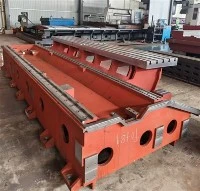
A machine tool worktable casting creates the structural link between a workpiece or fixture and the main machine body. It provides a broad area for supporting, locating, and fastening components during machining, setup, or inspection. Depending on the design, the part may include machined faces, T-slots, holes, ribs, guide-related sections, and mounting points for adjoining units. The material and geometry should be selected around the expected load path and required positional relationships. For a machine tool worktable casting, the drawing should define overall dimensions, material grade, working-surface requirements, critical interfaces, and every hole or slot that controls assembly. It should also distinguish precision-machined features from structural areas that can remain as-cast. Inspection can then concentrate on the dimensions that affect installation rather than treating every surface the same. Different milling, turning, grinding, boring, or special-purpose machines may require different layouts, so one standard shape cannot cover every application. Clearance for fixtures and moving parts must also be considered before the mounting pattern is finalized. We produce each machine tool worktable casting to the agreed drawing, including specified faces, openings, and connection details. A clear datum scheme helps machining and inspection teams verify the same relationships and allows the completed part to be checked against the machine envelope before assembly. This supports clearer checks before installation. Reviewing these points early also helps avoid conflicts between fixture space, mounting holes, and surrounding machine components during assembly.
Key Functions Of A Machine Tool Worktable Casting
Sep 15, 2026




Send Inquiry
Latest News