

As a core reference tool in the field of precision manufacturing and testing, the technical specifications for cast iron platforms serve as technical guidelines guiding the entire process of design, manufacturing, acceptance, and use. These specifications aim to ensure the platform possesses stable material properties, precise geometric accuracy, and long-term service capability. The specifications cover material requirements, structural dimensions, accuracy grades, processing methods, and inspection methods, providing a unified basis for production and application.
Regarding materials, the specifications explicitly require the use of high-quality gray cast iron or high-strength inoculated cast iron. Its chemical composition should meet the corresponding grade standards, and carbon equivalent, graphite morphology, and matrix structure must be controlled to achieve good damping, wear resistance, and casting performance. The internal texture of the cast iron should be uniform, and serious defects such as shrinkage cavities, porosity, and inclusions that affect strength are not permitted. A material inspection report must be provided.
Structural dimensions and working surface requirements depend on the application and accuracy grade. Platforms are typically rectangular or square flat plates, and their thickness and aspect ratio should conform to rigidity design principles to prevent significant deformation due to their own weight or load during use. The working surface must undergo aging treatment to eliminate internal stress and be scraped or ground to achieve the specified flatness and surface roughness. The scraping platform should have evenly distributed contact points, while the grinding platform must meet higher surface finish and precision requirements. Lifting holes or handles should be provided at the edges, with their location and quantity considering both ease of handling and protection of the working surface.
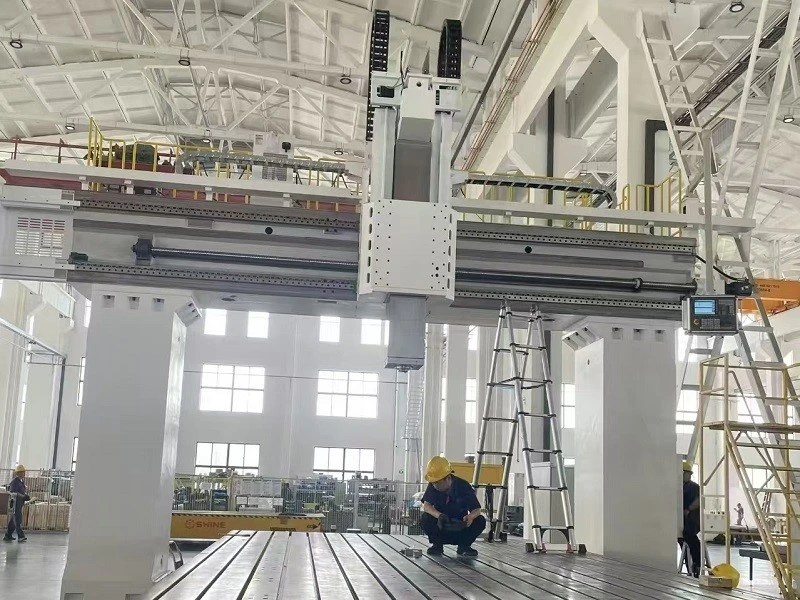
Precision grades are generally divided into grades 0, 1, 2, and 3, with grade 0 being the highest precision, suitable for precision metrology and high-requirement machining. The allowable flatness tolerances and local error limits for each grade must be clearly specified in the specifications, along with the measurement conditions and testing methods, such as using a standard bridge ruler, electronic level, or laser interferometer, and testing under specified loading in a constant temperature environment.
Regarding processing, the specifications emphasize that natural or artificial aging must be performed after casting. The duration and temperature are determined according to the material and structure to fully release residual stress. The surface can be treated with anti-rust oil coating, chrome plating, or spraying according to corrosion resistance and environmental requirements, but this must not affect the accuracy and contact characteristics of the working surface.
Inspection rules should cover both factory inspection and type inspection. Factory inspection includes visual inspection, dimensional measurement, and accuracy verification; every piece must be inspected. Type testing is conducted when materials, processes, or structures change, involving sampling to check if performance indicators meet specifications. Inspection data must be recorded and archived as a basis for quality traceability.
Usage and maintenance specifications should also be incorporated into the technical specifications, clearly stating that the platform should be stored in a dry, temperature-stable environment, avoiding impacts and localized overloads, and that regular accuracy re-inspections and surface protection should be performed.
In summary, the technical specifications for cast iron platform equipment, with material selection, rational structure, controllable accuracy, rigorous processes, and comprehensive inspection as their core, form a quality assurance system covering the entire lifecycle, providing reliable benchmark support for precision manufacturing and testing.


