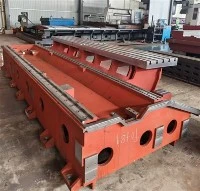

As a key transportation facility for intelligent logistics and intelligent manufacturing, the construction quality of automated rail transit directly affects the safety, accuracy, and long-term stability of its operation. To ensure that the rail system can efficiently and reliably serve production after commissioning, a scientific and rigorous standard system must be followed throughout the entire construction process, covering aspects such as foundation preparation, installation accuracy, drive and guide assembly, electrical connection, and acceptance testing.
In the early stages of construction, thorough site surveys and foundation preparation should be conducted. The strength and rigidity of the rail installation surface must meet design requirements, and the concrete foundation must meet the specified compressive and vibration resistance indicators, with a reasonable settlement stabilization period allowed. The flatness, elevation, and levelness of the ground or elevated platform should be comprehensively tested using precision measuring instruments. Any areas exceeding tolerances must be repaired first to prevent operational vibrations and track deviations caused by uneven foundations.
The installation of the rail body must strictly adhere to straightness and coaxiality standards. During the installation of multi-segment spliced tracks, each segment should be calibrated according to the design drawings to control the joint gaps, height differences, and joint flatness within allowable tolerances. Bolt connections should use a step-by-step, uniform tightening method, and be retightened under load to eliminate deformation caused by assembly stress. For heavy-load or high-speed tracks, prestressing adjustment and initial running-in should be performed after installation to verify structural stability.
The assembly of the drive unit should conform to power and transmission matching standards. The coaxiality of the motor, reducer, and transmission components (such as sprockets, synchronous pulleys, and roller shafts) must be strictly controlled to avoid additional vibration and wear caused by eccentricity. The tension of belts or chains should be adjusted according to the manufacturer's specified value; too loose a tension will lead to slippage, while too tight a tension will increase bearing load and energy consumption. Linear motor driven systems must ensure uniform air gaps between the magnetic circuit and the stator and mover to ensure smooth thrust output.
The installation of guiding and positioning devices must meet trajectory constraint standards. The positions of guide rails, limit switches, photoelectric sensors, and encoders should be precisely arranged according to the process path, ensuring reliable signal triggering and timely response. The installation location and coverage of safety protection devices (such as emergency stop devices, anti-collision buffers, and guardrails) should comply with safety production regulations to form an effective protective barrier.
Electrical connections must adhere to the principles of neat wiring, reliable shielding, and reliable grounding. Cable routing should avoid interference with moving parts and be properly protected against oil, water, and mechanical damage. Wiring between the control cabinet and field sensors must undergo insulation and continuity testing to ensure signal accuracy. Insulation resistance and grounding resistance tests should be completed before system power-on to prevent leakage or electromagnetic interference from affecting operation.
During the completion phase, system testing must be conducted according to acceptance standards. This includes no-load operation testing, load operation testing, positioning accuracy measurement, synchronization performance verification, and safety function testing. Test data should be recorded and archived, compared with design specifications, and the system should be put into use only after all tests are passed. Simultaneously, complete installation drawings, parameter setting instructions, and test reports should be provided to maintenance personnel to facilitate subsequent maintenance and troubleshooting.
In summary, the construction standards for automated machine track systems are centered on solid foundations, precise installation, reliable transmission, compliant guidance, electrical safety, and rigorous acceptance, forming a comprehensive quality assurance system covering the entire process. Only by following and implementing these standards can we lay a solid foundation for the long-term and efficient operation of automated tracks and help smart factories achieve stable and safe logistics and manufacturing collaboration.