

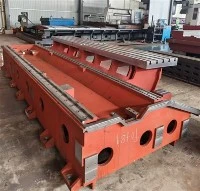
HT300 gray cast iron is used in machine-tool beds, tables, bases, and related structural parts where rigidity and vibration control are important. The material can be cast into ribbed shapes that carry equipment loads, after which selected faces are machined to establish working, mounting, and locating references. This division between cast structure and machined interface is central to a practical part drawing. The drawing should identify which surfaces control assembly, where holes or slots are required, and which areas may remain as-cast. When HT300 gray cast iron is specified, material grade should appear together with overall geometry, machining allowance, critical dimensions, and acceptance points. Inspection can then focus on the features that determine installation: working-face condition, flatness where required, hole locations, guide or mounting relationships, and the position of connected components. Rib arrangement and wall transitions also deserve attention during design because they influence load transfer through the casting. A complete specification helps the casting and machining stages follow the same dimensional basis. It also supports replacement work because the new part can be compared with an existing machine envelope before assembly. We use HT300 gray cast iron for drawing-based worktable and machine-structure castings, with machined faces and connection details prepared for the intended layout. Clear datum information keeps fabrication, inspection, and installation aligned throughout the project. The same information also helps purchasing teams distinguish structural casting requirements from the later machining and installation work.
Why HT300 Gray Cast Iron Is Used in Machine Tool Structures
Sep 15, 2026



Send Inquiry
Latest News